
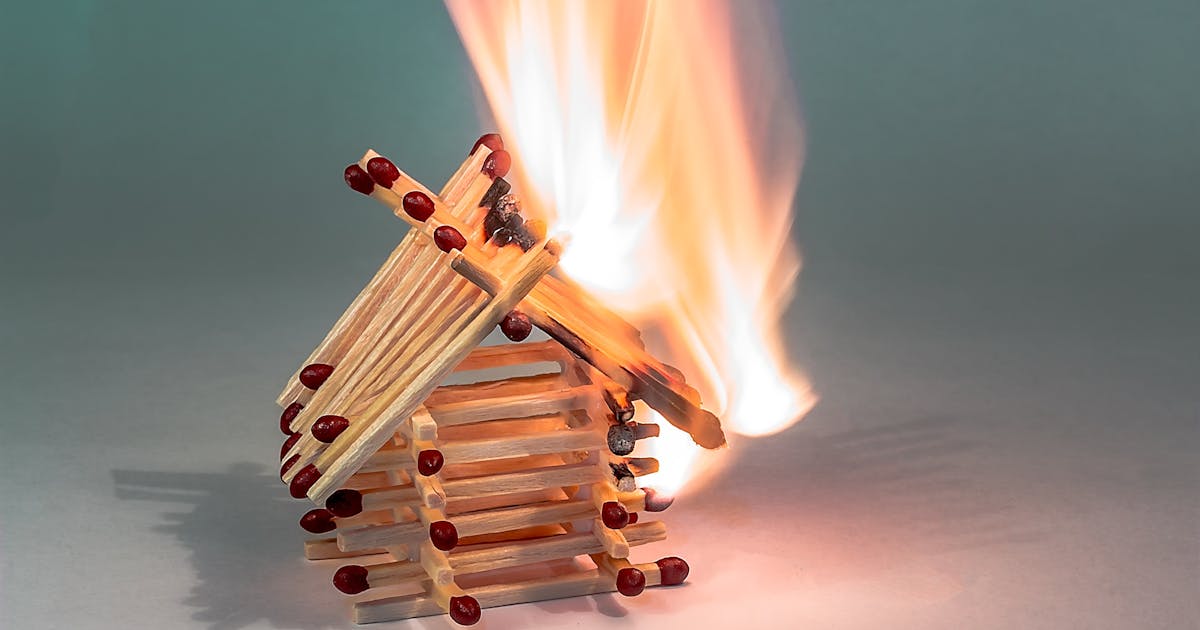
As National Fire Prevention Week approaches, it’s important to not only know how to keep fire from destroying your home but also how to protect yourself financially if it does. According to FEMA, cooking is the number one cause of house fires, but electrical malfunctions aren’t too far behind. Understanding what causes these disasters is one thing, but understanding fire prevention and home insurance policies are another. Let’s go over both.
Fire Prevention Tips
How can you prevent a fire from destroying your home? Here are some helpful tips:
- Use Products Safely – Always check the cords on your electrical appliances, like toasters and air fryers, to ensure that they are in good condition. A broken, kinked, or torn up cord can cause a fire.
- Pay Attention to Your Surroundings – Since most fires start in the kitchen, staying focused while cooking can stop a fire right as it starts. Having fire suppression items, such as fire extinguishers, on hand can give you power over the flames.
In addition to using standard fire prevention methods, you should also set up the following:
- A Safety Plan – What happens if a fire breaks out? You and your loved ones should have an evacuation plan so that you know how to safely exit the house in a panic.
- Set Up Systems – You need to have good, working smoke detectors throughout your home. Smoke detectors that are wired in and use your home’s electricity are the most reliable.
- Get Fire Extinguishers – Purchase and place fire extinguishers in various places throughout the home, such as in the kitchen, near the garage, at the top of the stairs leading to your bedrooms, and by your fireplace, if you have one.
- Keep Your Equipment Maintained – A fire extinguisher won’t work if it’s empty, and your fire detectors and alarms won’t work if they don’t have power. Take some time every six months to ensure that everything is working.
Homeowner’s Insurance Fire Coverage
Does your homeowner’s insurance cover fire damage? In most cases, this is part of the policy, but it is something that you should check, just in to make sure. And, while you’re discussing that part of your policy with your insurance agent, you should also go over how much coverage you have.
Remember that with the cost of materials rising and the overall worth of homes going up as well, it may cost more to repair your home after a fire than you have coverage for. This is a good time to increase your insurance coverage so that you don’t have to pay to repair or rebuild your home and replace your possessions should a fire occur.
Choose Spivey Insurance
Do you need to review and possibly update your homeowner’s insurance? Or do you want a new policy altogether? If so, please reach out to Spivey Insurance. Our knowledgeable agents can answer any questions that you may have, as well as find the best policy for your needs.